
Kėdainiai Regional Museum – one of the oldest in Lithuania – was established in 1922. The first director of the Museum was its founder, a chairman of Kėdainiai District Board Vladas Rybelis, who gave away a big collection of antiquities, collected by him (about 1000 exhibits). The Museum was sustained by Kėdainiai District Board, that allocated 3 small rooms in the ground floor of the Municipality building (now – the Public Library of M.Daukša). The inventory of the Museum was comprised of 5 cases, 3 cupboards and 1 small shelf. The exposition had 2 cases and 1 shelf. In the exposition there were sections of Archaeology, Numismatics, Ethnography, Nature and History, a collection of guns and blazons of towns. All the Museum’s exhibits were exposed.
From 1925 a head of the Museum was librarian J.Laucytė, who devolved her post to S.Švalpa in 1934. From the very foundation, the Museum lacked for rooms. In 1931 Commission of the District Board stated: ‘…the Museum is in one room and almost all exhibits are piled, so visitors, especially in greater number, cannot even turn around. It is necessary to extend the Museum as far as possible.’ In the same year, another commission had pointed out: ‘The reading-room and the Museum are fitted up very nicely, it is light and clean, furniture is good and in good condition…’

Because of lack of means, for Kėdainiai District Municipality it was difficult to sustain the Museum, so, in early 1937 the Museum was taken over by a recently established Association of Regional Studies. The members of the Association of Regional Studies were: V.Rybelis, A.Tylenis, S.Sužiedėlis, Z.Ruseckas and S.Tijūnaitis. The Association, except its direct tasks – to collect and manage exhibits – had a purpose to preserve antiquities and historical monuments from obsolescence.
In 1939 a keeper of the Museum was G.Bobelis. At that time, in the Museum there were about 1800 exhibits.
During World War II the Museum and its collections suffered great losses: the withdrawing Nazis had burst and grabbed a part of exhibits. The remaining exhibits had been piled in storehouses in different locations. A head of the Museum G.Bobelis managed to save a part of exhibits from their complete destruction and embezzlement, however, the damage done to the Museum by the Germans reached a sum of 563200 roubles. Only in late December of 1945, the Museum had got rooms, however they were poured with grain of Grain Purveyance Station for a time.
In the post-war period the Museum had about 5000 exhibits. The then Soviet authority used the Museum for propagation of its ideas: the Museum’s visitors used to be indoctrinated with Stalin’s and Lithuania SSR Constitutions, five-year plans and order of elections. In the Museum there were sections of the Socialist Development, History, Folk art and Archaeology.
In the 6th – 7th decades the Museum organized guided tours for the district collective farmers and schools. The Museum also organized lessons on history, meetings with war veterans and members of underground organizations. The Museum was headed by O.Mažylienė, later – V.Račienė and A.Sakauskienė. In 1956 the Museum moved to other building – Tarybų street 23 and in 1967 – to a building at Tarybinės Armijos street 45 (now – J.Basanavičiaus street). The building was overhauled and had a storeroom. After the reconstruction, the Museum was opened in 1969.
In 1977 the Evangelic Lutheran Church, where an art gallery was founded, became a branch of Kėdainiai EthnographicalMuseum.
After inspection of the Museum in 1988, it was found out, that the records of exhibits were kept negligently and a part of most precious exhibits is vanished. Therefore, a head and almost of workers of the Museum were substituted. V.Sadauskaitė became a new director of the Museum.
When the Revival period started, the Museum arranged new expositions about the interwar independent Lithuania and the deportees. In 1991 Kėdainiai Local Lore Museum was reorganised into Kėdainiai Regional Museum and got new branches: Memorial Museum of M.Katkus in Ažytėnai, Memorial Museum of J.Paukštelis, Art gallery of Town hall and a concert hall in the Reformed Church.
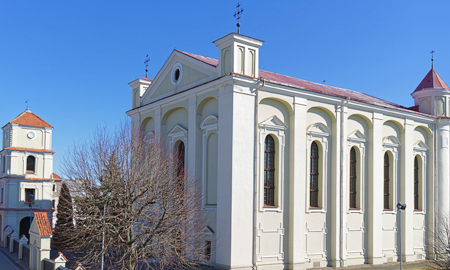
From 1992 till now, a director of the Museum is R.Žirgulis. During that period, there were a lot changes in the structure of the Museum. In 1993, a Museum of 1863 Revolt in Paberžė was founded, in 1995, a crypt of the Dukes Radziwills in the Reformed Church was restored and a restoration of the unique sarcophaguses of the Dukes of the 17th c. was started.
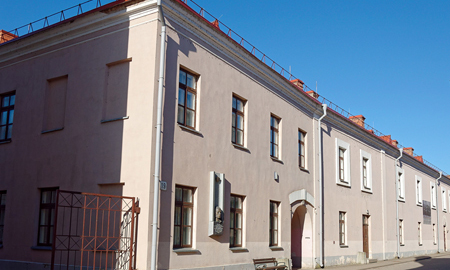
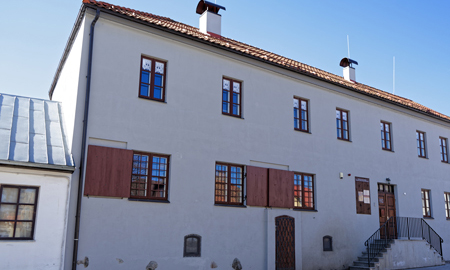
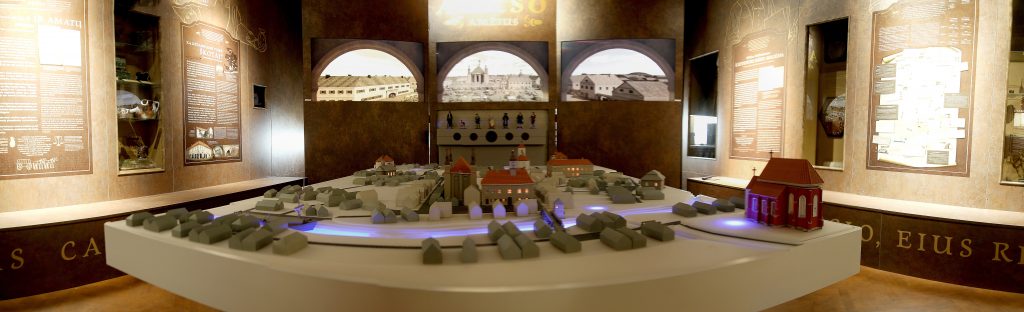
In September 2000 the Museum moved to a new building – a former monastery of the Carmelites of the 18th – 19th c. (Didžioji Street 19). In the restored rooms, there were installed new expositions of V.Svirskis crosses, unique exhibits and documents of the 17th – 18th c., a set of furniture made of horn in the 19th c. from Apytalaukis mansion.

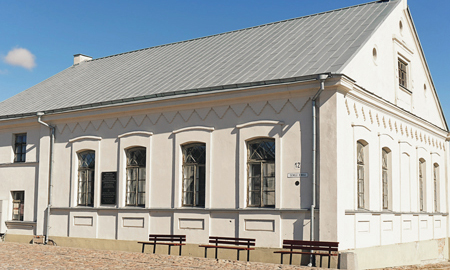
In April 2001 the restoration of the Dukes Radziwills Mausoleum was completed. In the Mausoleum, there are 6 restored sarcophaguses. To date, it is the only one reconstructed tomb of the noblemen of the Grand Duchy of Lithuania of the 17th c. in Lithuania. On August 16, 2002, in the restored Small synagogue of the 19th c. was founded the Multicultural Centre of the Museum.
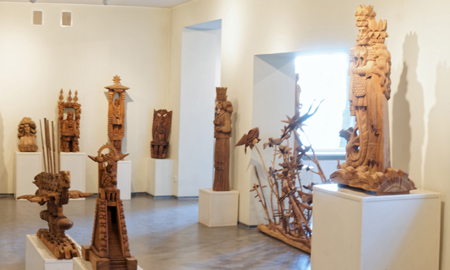
In 2004, another museum was opened – the Museum of Wooden Sculptures of Vytautas Ulevičius, that was established in Kėdainiai District Municipality building.

At the present time, Kėdainiai Regional Museum has 6 branches: the Multicultural Centre, Mausoleum of the Dukes Radziwills in the Reformed Church, Cultural Centre ‘The Arnets House’, Museum of Wooden Sculptures of V.Ulevičius, the Museum of 1863 Uprising in Paberžė and Janina Monkute – Marks museum – gallery.

FOLLOW US: